ThinkForward hosts DWP Permanent Secretary

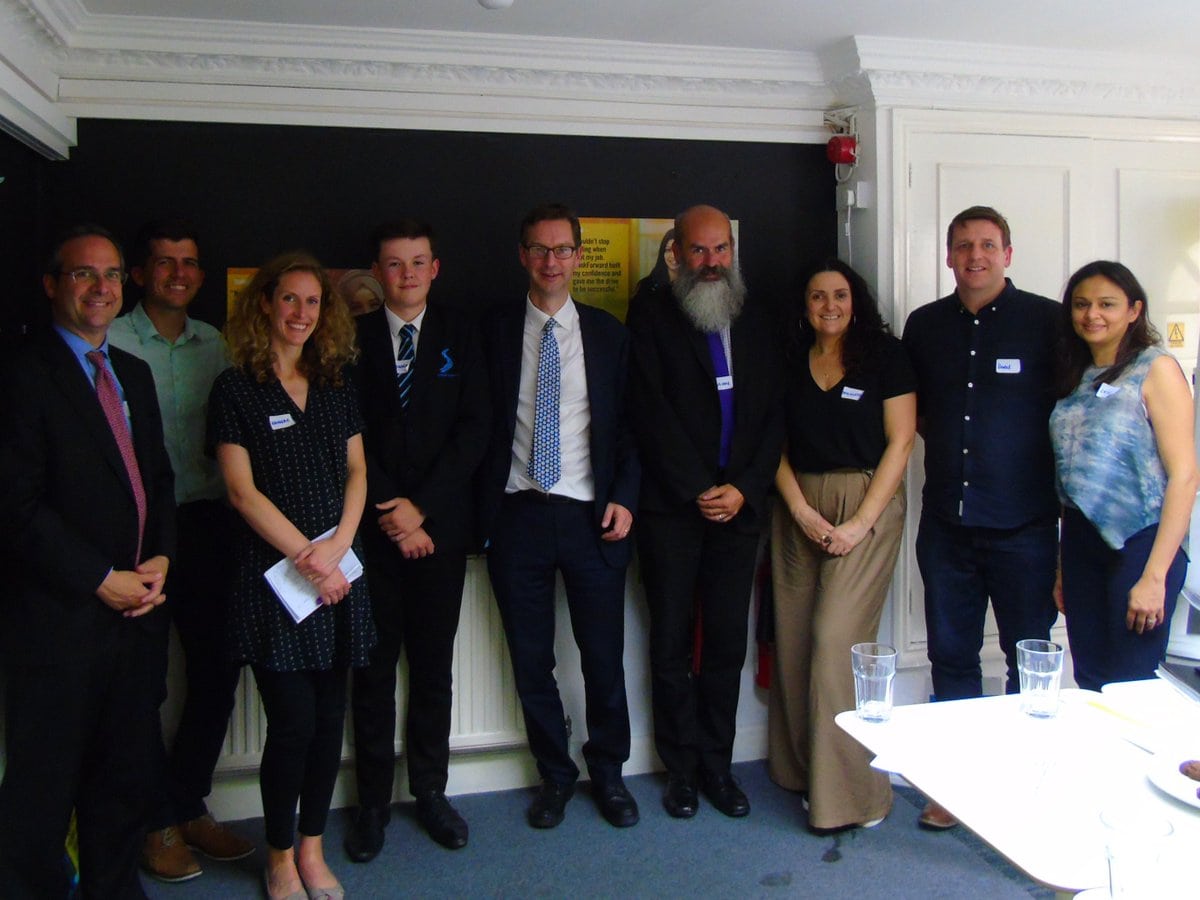
ThinkForward has hosted a visit by Peter Schofield, the Permanent Secretary for the Department for Work and Pensions.

As part of Employability Day 2019 Mr Schofield learnt about how ThinkForward is closing the inequality gap by supporting young people in Kent, Nottingham and East London to develop the skills and experiences they need to get ready for the world of work.

David Dobson, Head of Operational Engagement at COOK, one of our business partners in Kent, spoke about why ThinkForward is the perfect match for the business: “We’re looking for opportunities to inspire young people because they’re the future of our company. We have to think differently because we’re up against a lot of different competitors, so we’re looking ahead and how we can tap into the potential of the local workforce of the future.”

Everyone present also heard from Connor, a Year 10 student from Strood Academy in Kent who spoke about his journey with ThinkForward and how he now has a clear career goal. He said: “Thanks to the work insight opportunities I’ve had with ThinkForward I know that I want to be a chef and what I need to do to get there. My self-assuredness has also improved massively. Two years ago, I would never have thought I would be here speaking to a room full of professional adults, that’s completely thanks to ThinkForward. Without my coach Julian I wouldn’t be where I am now.”

Mr Schofield took the opportunity to answer questions on work being done within the civil service is doing to address some of the challenges faced by disadvantaged young people and how the government might be able to work with employability charities in future.

“It was great to meet and hear about the great work ThinkForward, with Impetus, are doing to support young people into employment through their five-year programme. It was particularly interesting to hear about this through the personal experience of ThinkForward’s student ambassador Connor, who brilliantly exemplified the difference that ThinkForward can make to a young person, by talking me through his own journey in a confident and engaging way. Many thanks for a very interesting visit.”


Celebrating Volunteer’s Week

It’s Volunteer’s Week and ThinkForward would like to acknowledge and celebrate the support, enthusiasm and commitment of everyone who gives up their time for the young people on our programme.

Around 300 people volunteer for ThinkForward across all our ready for work activities in Nottingham, Kent and London.

It’s our partnerships with businesses and their staff which enable us to provide some of the vital elements of our programme – giving young people the opportunity to learn more about careers and different workplaces through insight days, sharing knowledge to develop CV writing and interview skills and also to have a mentor.

Mentors build meaningful relationships, share their experiences, give advice and encouragement, break down barriers to the world of work and support young people to develop new skills, confidence and aspiration.

The beauty of volunteering with ThinkForward through your workplace is that everyone benefits. Businesses recognise that providing a CSR programme their employees can engage with helps them attract the best talent, staff grow professionally and personally from giving up their time to volunteer and young people in the community gain experiences and knowledge they would probably not have otherwise.

Henry Ellis at KPMG in Nottingham is a volunteer mentor working with students at NUSA & Ellis Guilford School. He said: ‘I believe it is important to volunteer with ThinkForward because it gives me the chance to draw on personal experiences to help guide future generations of our local community.

‘Volunteering over the last two years has developed my own personal awareness and taught me something new every week. The students ThinkForward work with are inspiring and always willing to learn, which gives me a great sense of fulfilment as a mentor. The development individuals show between the start and the end of the mentoring sessions is amazing and the growth in character and personality makes it all worthwhile.’

Nicolette Bassan, our business partnerships manager in Kent said: ‘ThinkForward is fortunate to work with some amazing businesses, big and small, who recognise the value of volunteering for their staff and also the wider benefits to the community of supporting young people get ready for the workplace.

‘Hosting insight visits, giving a careers talk or supporting a group of young people to get ready for a job or college interview are just some of the ways that people volunteer with us. We know that staff get a huge amount of personal satisfaction through volunteering and learn new skills themselves at the same time, while our young people really do value the time staff give up to support them.’

As part of our social action work with young people ThinkForward also encourages students to volunteer and give back to their local community. For example, in Kent young people from all six of our schools have been volunteering with the Bay Trust in Deal, carrying out environmental improvements and creating play spaces for children.

It’s great to see the positive ethos of volunteering starting to develop in the next generation.

ThinkForward’s evidence to the APPG for Youth Employment

The APPG for Youth Employment recently published its report into the role the government is asking businesses to play to support youth employment.

ThinkForward, which has business engagement at the heart our five-year programme, provided evidence to the inquiry. We were able to draw extensively on our own experiences of creating and managing relationships with employers to deliver work-related activities for young people to support them to make the right career choices.

Research shows that exposure to the workplace reduces the likelihood of young people going onto become unemployed when they leave school. However, there are several challenges on both education providers and businesses to deliver these opportunities.

You can read our full submission here but highlights of our evidence include:

  • Study programmes, traineeships, T-levels, supported internships and apprenticeships all require varying degrees of employer engagement. Some of these programmes are funded across more than one government department but there does not appear to be any strategic coordination of their requirements, or any cross-government youth employment strategy.
  • It is our experience that the employer engagement burden on schools is a huge challenge. Resourcing is difficult, especially given the funding constraints schools face.
  • Schools and colleges can find it hard to provide employer opportunities for young people who are the least engaged, yet they are the students who need these experiences the most.
  • Organisations like ThinkForward play an important role to bridge the gaps the schools cannot, both in developing young people to get them ready and interested to engage with workplace activities and identifying and nurturing businesses to provide the opportunities.
  • There is huge variance across the UK in the ability of employers to provide engagement with young people. Some regions will contain large scale employers, a multitude of sectors and good transport links, whilst more rural areas will lack both the size and range of employers and the transport infrastructure to access what little opportunity there is.
  • Businesses that are known to provide engagement opportunities are often inundated with requests and can’t handle the demand. SMEs often don’t have the resources so tend to shy away from providing any engagement opportunities at all.
  • Creating and developing effective engagement takes time and resources – from both the business and school/college/youth organisation.

ThinkForward’s CEO Ashley McCaul said: ‘I’m delighted to see that one of the report’s recommendations reflects one of our suggestions that there should be a UK wide youth employment strategy. We know just how vital it is for young people to benefit from meaningful engagement with employers but currently the system is uncoordinated, patchy and too reliant on the good will of businesses.’